
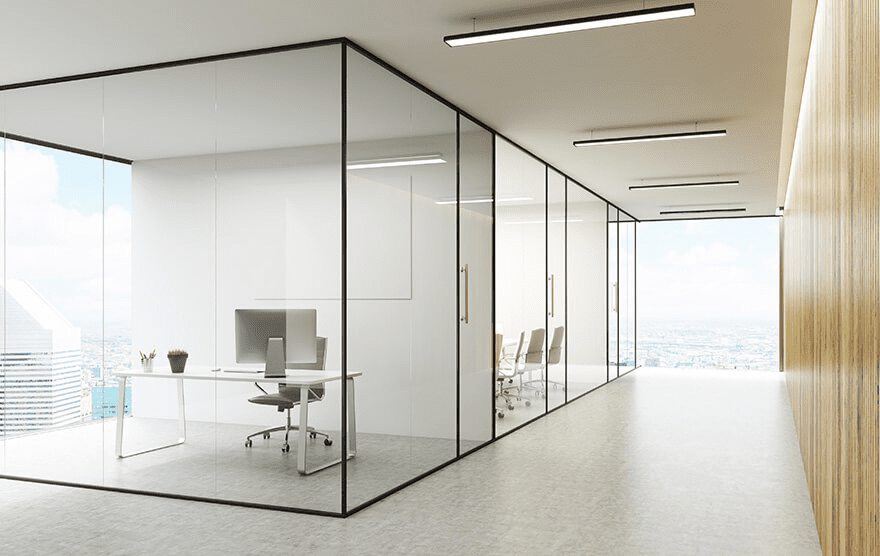
Smart glass is a stylish method to maintain privacy without compromising that open feel, and it happens to be very high-end looking too! With one switch, a remote or automated system with a valve from pink to clear/frosted/colored or opaque (depending on technology) can easily go.
This is a solution for real problems of corporations, malls, clinics, hotels, or luxury homes. While people are looking for glass interiors, they also require privacy.
They want daylight but no blasting sun stories. They want an upscale aesthetic but not curtains, honeycomb shades, or significantly separated spaces.
Demand is also rising. Various market studies have set out a forecast of double-digit growth in the various segments for smart glass and smart glass windows solutions over architectural, commercial/residential/transport, or industrial uses—corresponding recent 2026 market reports confirm focused areas with projections reaching USD $25–$30 billion.
Based on common responses from fit-out and glazing jobs, the most powerful argument clients present for upgrading to this type of window is probably rather simple: it will allow a room to function but look uncluttered at the same time.
What Is Smart Glass?
Smart Glass is an OAR component that has advanced glazing, which allows this surface to change its appearance or even its operation. In layman’s terms, it can switch from see-through to opaque or light to tinted depending on the electrical power and a few other variables like heat etc.
It is also known as switchable glass, privacy glass, smart glass, PDLC glass, dynamic glass, and electric glass. These terms are related—but not always interchangeable as the same product.
Dynamic glass featuring either electric current, solar reaction, or thermal response to change tint between transparent and non-transparent is illustrated in a public technology brief from 2025. It also divides the technology into active systems, which rely on electricity, and passive systems that respond to light or heat.
PDLC (Polymer Dispersed Liquid Crystal) — In most of the interior privacy category, PDLC is a common choice. They frost over when privacy belongs, and they become clear when visibility is desired. An electrochromic or tint-control option can be used on the exterior façades when it is only glare and heat control that we are primarily worried about.
How Does Smart Glass Work?
The working of most PDLC smart glass systems utilizes a thin layer of liquid crystal positioned within the glass. When power is applied, the liquid crystals line up.
The light goes through, and the panel looks transparent. Without power, the crystals disperse randomly. The panel appears crystalized, enabling no one to see through it with clarity.
But this is why a ton of meeting rooms and clinics make use of this process. Staff can be private while discussing, then revert to an open glass scenario after the meeting.
Again, from Gauzy: High voltage indicates that molecules should be oriented to transmit light, while power cut-off scatters the molecules through stochastic processes and provides a relatively opaque layer of glass.
An awesome installer will plan the transformer, what course to run wiring from, and at which level they are going to change it on a switch by putting it in their panel, a safe distance away from the edge protection of the floor, before integrating it.
These details matter. Imperfect wiring or dull-edge sealing influences performance, safety, and the presence of completed infractions.
Top Benefits of Smart Glass
Instant Privacy Control
Smart glass provides its users with privacy when they need it and transparency when needed. Hence, the better use it has again and is ideal for constructing a foundation in offices, bathrooms, and clinics, along with meeting rooms, salons, colon spas, houses, and luxury villas.
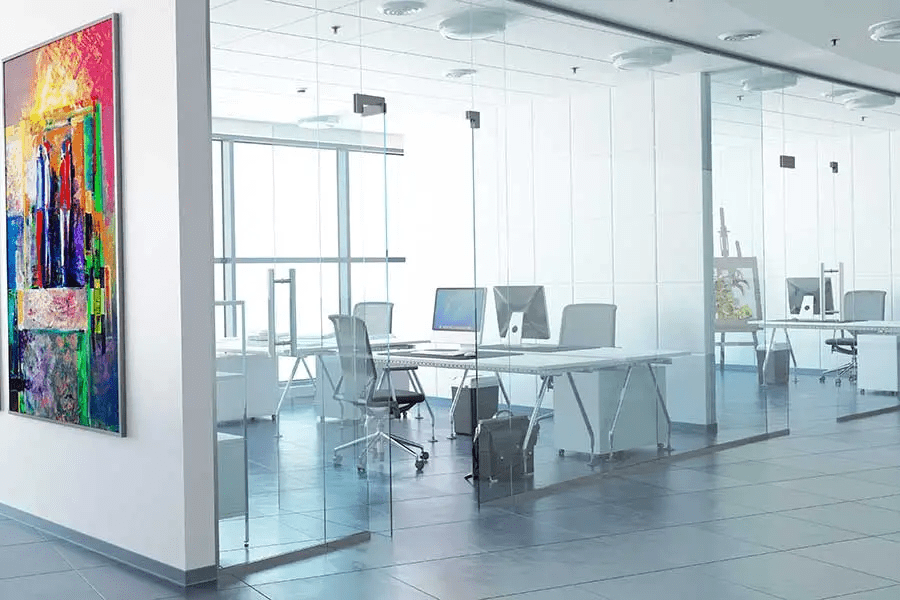
At a workplace, it is connected and feels light with the use of clear glass in the meeting room. What would take seconds in a confidential call, the same room becomes private. No blinds. No manual work. No clutter.
Modern and Minimal Design
Simplicity is always the ultimate sophistication, and this can often be seen in the best interiors. So you can support that style with the use of switchable systems at home, as it excludes curtains, roller blinds, or bulky partitions.
We recommend this option where a client requires clean premium finishes—often in executive offices, hotel suites, and modern retail. The glass is an integral aspect of the design, not something stacked on top as an afterthought.
Better Natural Light
Privacy solutions that people are familiar with tend to obstruct light. Frosty stickers, curtains, and blinds make the space feel small & dark.
An adjustable partition allows light to move through the space but still provides privacy. This is helpful for internal partitions, glass cabins, bathrooms, and malls where every bit of brightness counts.
Energy and Glare Control
Smart glass can also cater to comfort needs if the correct product is selected appropriately for that specific area. Daylight sites are, for example, a few of the dynamic window systems designed to minimize glare, solar heat gain, and the requirement of using blinds.
According to the U.S. Department of Energy, dynamic windows are able to adjust incoming daylight and solar heat transmission, which can reduce lighting as well as HVAC loads while also improving thermal comfort, aesthetic values & visual comfort aids.
That is not to say that all products save the same amount of energy. The interior PDLC is mostly for privacy. Exterior tinted systems are typically more effective in controlling heat and glare. This is where consulting an expert becomes important.
Best Uses of Smart Glass
Smart Glass for Homes
This technology is used in bathrooms, bedrooms, and living rooms of homes and on balconies between stair areas or glass partitions. This is more useful when the owner wants a commercial-grade hotel feel at home.
When the bathroom window is still bright in the morning but private at night without putting up a solid wall, partitioning between the dressing area and bedroom is possible.
This is where balcony panels from Rapid Wall can provide privacy between the development and any potentially towering neighboring apartment but still retain an open space.
Smart Glass for Offices
Offices are the strongest use case of all. Fast privacy control is useful for glass cabins, conference rooms, manager rooms, and shared meeting spaces.
What an office of the future truly represents for a business is flexibility. A room that can accommodate client meetings, HR interviews, and board discussions, as well as teamwork without any changes in layout. Moreover, it makes visitors have the best first impression.
Healthcare Spaces as teamwork
Hospitals, dental clinics, dermatology clinics, wellness centers, and laboratories can also benefit from these switchable partitions to keep spaces cleaner with limited-access areas.
For all that, curtains get dusty and require frequent washing. Blinds can be hard to clean. The shiny glass surface makes it easier to wipe and keep clean, which is beneficial in medical environments.
Retail and Hotels
Retail sectors utilize privacy glass in areas like VIP areas, display rooms, changing or fitting zones, and product launches. It is widely used throughout hotels—in suites, bathrooms, and spa areas, as well as complete restaurants or private lounges.
This can also be a branding tool for malls and showrooms. A glass wall can remain frosted prior to a launch, then become transparent when the display is activated. You do not use props to create drama, so the story says that you just need your chest.
Smart Glass vs. Smart Film
Smart Glass includes a switchable layer inside the glass. It has a more premium feel and is typically the choice for new builds and luxury interiors, as well as areas of heavy use where durability and finish are important.
Smart film is different. It is used on top of already existing glass. This practical nature makes it suitable for renovation, office refurbishment, and leased spaces, where removing the existing glass is not ideal.
Public PDLC (Polymer Dispersed Liquid Crystal)—brief notes: It is produced as a film laminated to glass. The film can be placed on existing glass, which the dealer cuts. The glass version is between two laminated panes with at least a tempered layer of thickness 20 µm.
Film generally tends to be less expensive in the long run and quicker to install. Switchable glazing that is embedded directly in the glass looks much cleaner, and it is a better solution when just planning a project from scratch.
Is It Worth the Cost?
The answer is either right or wrong, depending on the space. In a room with low privacy needs, simple frosted Far Rostea is likely sufficient. Switchable glazing can become a good investment for a premium office, clinic, villa, hotel suite, or showroom because it solves design and function simultaneously.
Size, glass type, and amount of wiring (as might be required for advanced controls) will all have an effect on cost, as well as access to installation areas; customization complexity also drives cost, built into the assembly or applied film. An increased budget is required for curved panels, larger sizes, uncommon shapes, and automation.
We urge clients to analyze the value, not just price. Ask what the product replaces. It would take out the blinds, divisions, and drapes, as well as future support. It can also render one single room multi-functional (this is a huge advantage for commercial settings).
Things to Consider Before Installing It
Make sure you check the location and motive before ordering. Is the panel you are working with for privacy, glare control, heat, or something else? This answer determines the product selection.
Confirm the power supply, switch position, glass measurement size (if applicable), safety requirements/guard pages for the laser working area, maintenance access points, and warranty. Inquire about who will take care of measurements, coordinate the wiring, and provide after-sales support.
Good installation is as important (possibly more so) than the product. The difference between a high-end result and an average one can be down to the cleanliness of your edge finish, transformer correctness, wiring safety requirements that have been met, and outer acoustics sealed in.
FAQs
What is the difference between switchable glass and smart film?
Switchable glass is a privacy technology built into the glass unit itself. Smart film is a thin layer placed over the top of existing glass. Film is most aggressive on renovations and built-up glass, with the latter being contingent regularly while picking a cleaner, top-notch finish.
Does privacy glass need electricity?
The majority of PDLC privacy systems require power in order to become clear. When powered off, they typically revert back to a frosted or opaque state. Others are responsive to heat or light, as opposed to other types of dynamic glazing.
Is it possible to apply this product on existing glass?
Well, provided the surface is appropriate, smart glass can generally be installed on existing glass. Feather is pretty much made for new projects, or ones where the glass will be fully replaced with built-in switchable glazing.
When is this solution more helpful?
It sounds ideal for meeting rooms, clinics, and bathrooms in hotel suites or retail displays that make privacy a prime concern, as well as executive offices, spas, and glass partitions.
Is it hard to maintain?
No. Normal care makes the glass surface quick to clean. You are instructed to gain knowledge up to October 2023.